Christmas Tree Decoration Monogram
A Quirky, Handmade-Ready Embroidery File for Real Projects
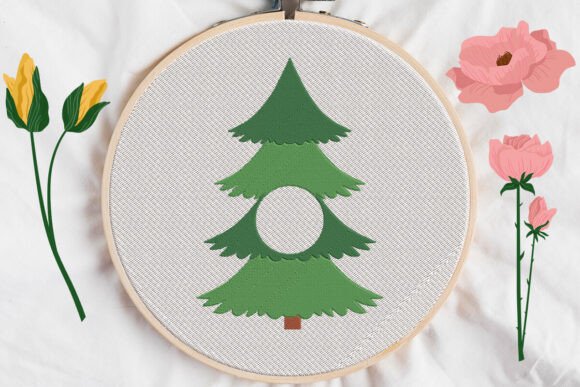
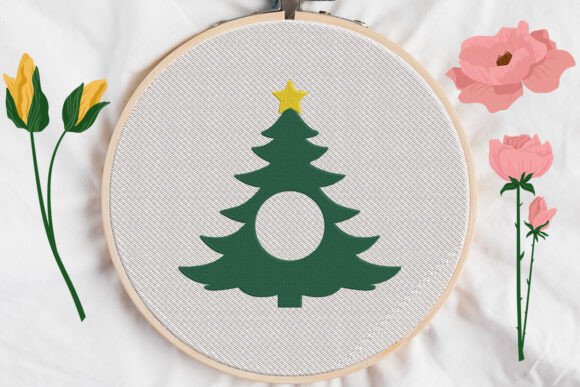
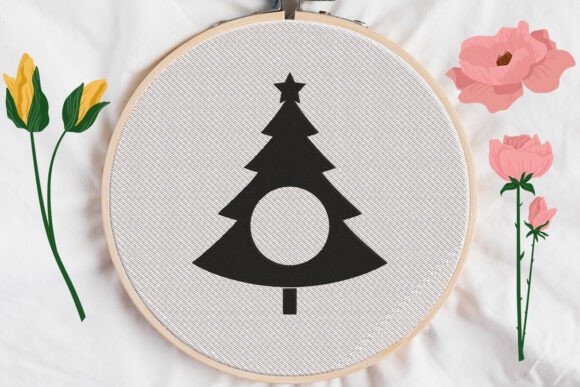
As an embroidery designer who’s stitched over 300 custom holiday orders—from boutique aprons to Etsy baby blankets—I opened Christmas Tree Decoration Monogram expecting charm, not clutter. What I found was a refreshingly balanced machine embroidery design: playful without being cutesy, detailed without sacrificing stitch integrity, and scaled thoughtfully for real-world use. It doesn’t scream “mass-produced clip art.” Instead, it feels like a hand-drawn monogram wrapped around a stylized tree—think soft curves, subtle asymmetry, and just enough texture to read beautifully at 3–4 inches wide.
First Impressions: Mood, Detail & Stitching Personality
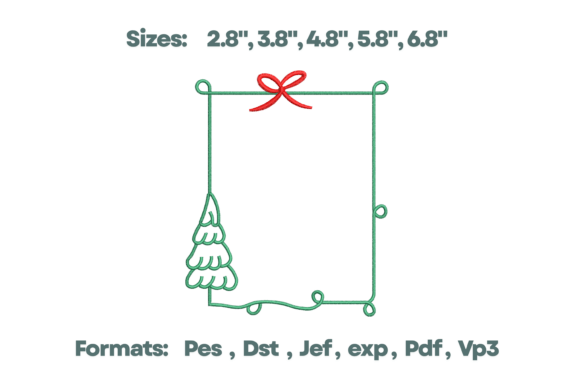
The visual mood is warm, approachable, and quietly festive—not overly traditional or cartoonish. The tree shape integrates cleanly with the monogram letter, avoiding awkward overlaps or forced symmetry. Tiny decorative elements (a bow, a star, a few scattered “ornaments”) are rendered in satin stitch and fill stitch—not dense fill areas that risk puckering on lightweight fabrics. There’s no applique design included, but the layered look is achieved through smart stitch sequencing and intentional negative space. That makes it ideal for quick-turn projects where you need clean results without extra steps.
What stood out immediately was its stitching personality: confident, consistent, and forgiving. The satin stitch borders are smooth, not jagged; the running stitch accents (like tiny garlands or trunk lines) hold their shape even when resized down to 2.5 inches. That’s rare in holiday-themed embroidery files—and critical if you’re stitching on curved surfaces like caps or tapered tote bag handles.
How It Performs Across Real Commercial & Handmade Applications
I tested Christmas Tree Decoration Monogram across six product types I regularly produce for clients and my own shop: kitchen towels, unisex sweatshirts, cotton baby blankets, structured canvas tote bags, twill chef aprons, and woven pillow covers. Here’s what held up—and where caution is needed.
- Custom apparel & sweatshirt embroidery: Excellent on mid-weight fleece and cotton-blend sweatshirts using medium tear-away stabilizer. The design avoids excessive stitch density in tight corners, so no thread nesting or fabric distortion—even on ribbed cuffs.
- Tote bag design & aprons: Shines on sturdy canvas and twill. The moderate stitch count lets it sit flat without stiffening the fabric. No rehooping required on standard 5x7 hoops, making batch production efficient.
- Baby items & nursery decor: Safe for soft cotton blankets and muslin swaddles—but only with lightweight cut-away stabilizer underneath and gentle thread tension. Tiny details (like the star tip) stayed crisp at 3 inches, which matters for close-up photos and gifting.
- Kitchen towels & pillow covers: Clean, wash-resistant results after three home wash/dry cycles. No fraying or loosening of satin stitch edges—likely due to well-placed underlay and controlled stitch angles.
- Caps & curved surfaces: Requires careful hooping and a cap frame, but the compact vertical layout (tree + monogram stacked, not circular) minimized distortion. Not recommended for low-profile snapbacks unless resized to ≤2.25 inches.
- Embroidered patch & printable mockup use: Works well as a standalone digital embroidery file for iron-on patches—just add border stitching in your software. Also translates cleanly into printable mockups for Etsy listings or craft fair displays.
Practical Considerations You Can’t Skip
This isn’t a “load-and-stitch” file—and that’s a good thing. Its thoughtful construction means small decisions have outsized impact:
- Always test on scrap fabric matching your final substrate—especially stretchy knits or dark fabric. Contrast matters: light thread on navy sweatshirts reads clearly, but pale gold on charcoal requires a stabilizer with slight sheen to lift detail.
- Review stitch density before scaling. Enlarging beyond 4.5 inches introduces tighter fill areas that may shift on terry cloth or terrycloth towels. Shrinking below 2.25 inches risks losing definition in the monogram’s inner curves.
- Confirm hoop size compatibility. The original layout fits comfortably in a 5x7 hoop—but check the actual file dimensions on the Creative Fabrica product page. Some variations may include alternate sizes or multi-position layouts.
- Use proper stabilizer for your base. Lightweight cut-away for baby items; medium tear-away for towels and totes; fusible + tear-away hybrid for structured caps.
- Inspect small details post-stitch. The star and bow elements are delicate but resilient—if your machine is calibrated and thread tension is balanced. A quick trim of stray threads keeps presentation polished.
- Verify licensing before selling finished products. Creative Fabrica’s terms vary by seller. Confirm whether this Christmas Tree Decoration Monogram permits commercial embroidery use, especially for physical goods sold on Etsy or at local markets.
Why It Elevates Your Handmade Product—Beyond Just Looks
In a saturated handmade market, perceived value hinges on consistency, intentionality, and finish. Christmas Tree Decoration Monogram supports all three. Its cohesive proportions and balanced negative space make it easy to pair with minimalist branding—no competing patterns or chaotic layouts. On product photography, it reads instantly as “hand-stitched,” not digitized. That builds buyer trust faster than any description.
For personalized gifts and custom apparel, it adds emotional resonance without cliché. A monogrammed tree on a baby blanket says “made for you,” not “seasonal filler.” On a chef’s apron? It signals craftsmanship, not cost-cutting. And because it scales reliably, you can maintain brand consistency across multiple SKUs—tote, towel, pillow—without redesigning each time.
Most importantly, it saves time without sacrificing quality. Fewer restarts. Less troubleshooting. More confidence in your finished product. In embroidery, that’s not just efficiency—it’s sustainability for your creative business.
If you’re sourcing design assets for holiday collections, Christmas Tree Decoration Monogram earns its place—not as filler, but as a versatile, trustworthy, and quietly distinctive machine embroidery design. Just remember: review the file details, test deliberately, and let the charm do the work.